
New-build garden guide
How your new-build garden comes together
What we find at handover, the order we work in, how the day runs and how to look after your new lawn once it's down.
Before we start
What to expect from a new-build plot
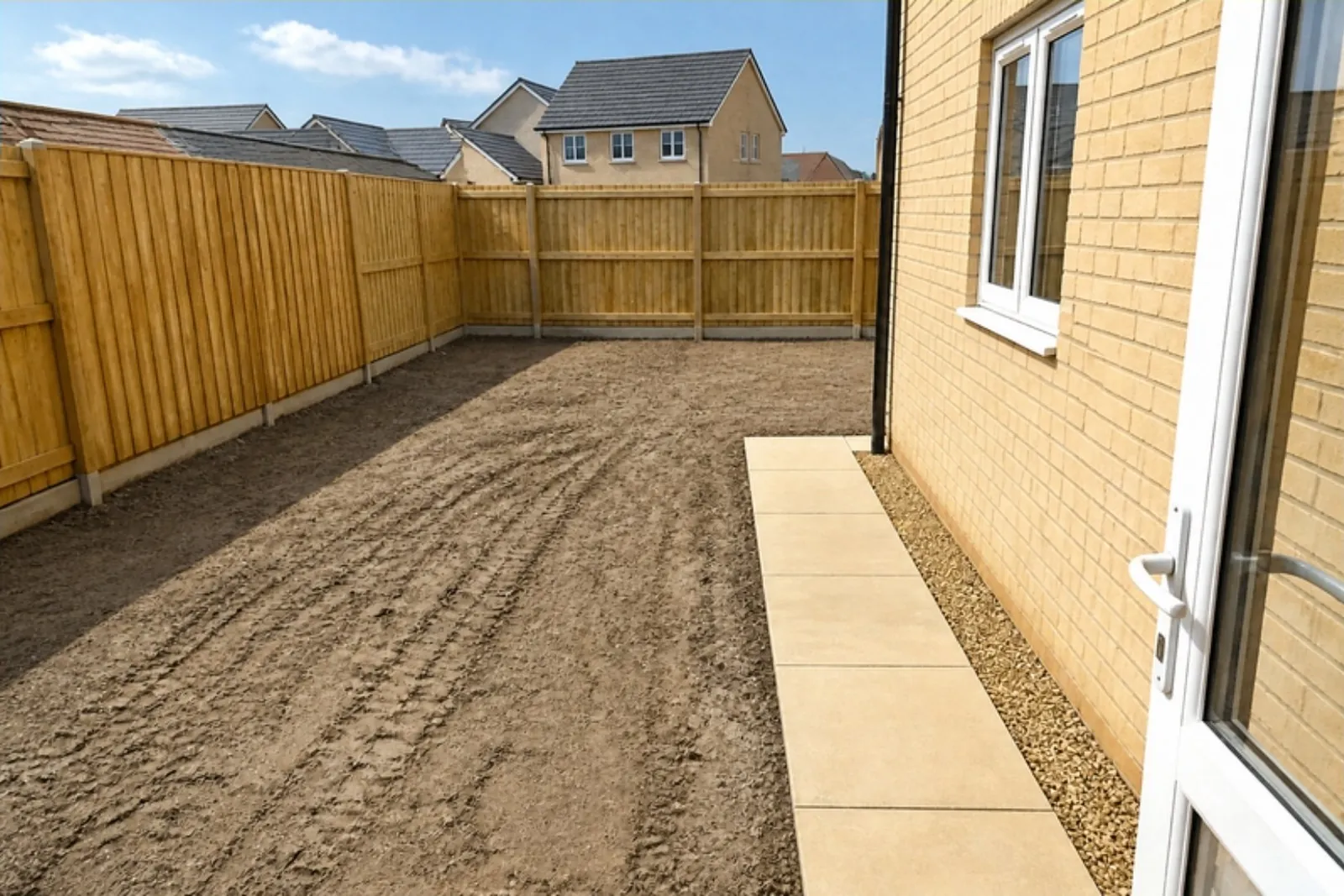
New homes are usually handed over with the garden unfinished. The ground has often been driven over by site machinery, so it's firm and slow to drain, and the surface can hide bits of brick, packaging and stone.
Topsoil varies a lot from plot to plot. Some gardens have a reasonable layer, others have a thin covering over clay, and a few have almost none. Levels can be uneven where trenches and drainage runs were filled in.
None of this stops you having a good lawn. It simply decides how much preparation your garden needs, which is why every quote is worked out for your garden.
Stage by stage
The order of work
Each stage sets up the next, so nothing is rushed or skipped.
-
01Start
Clearing
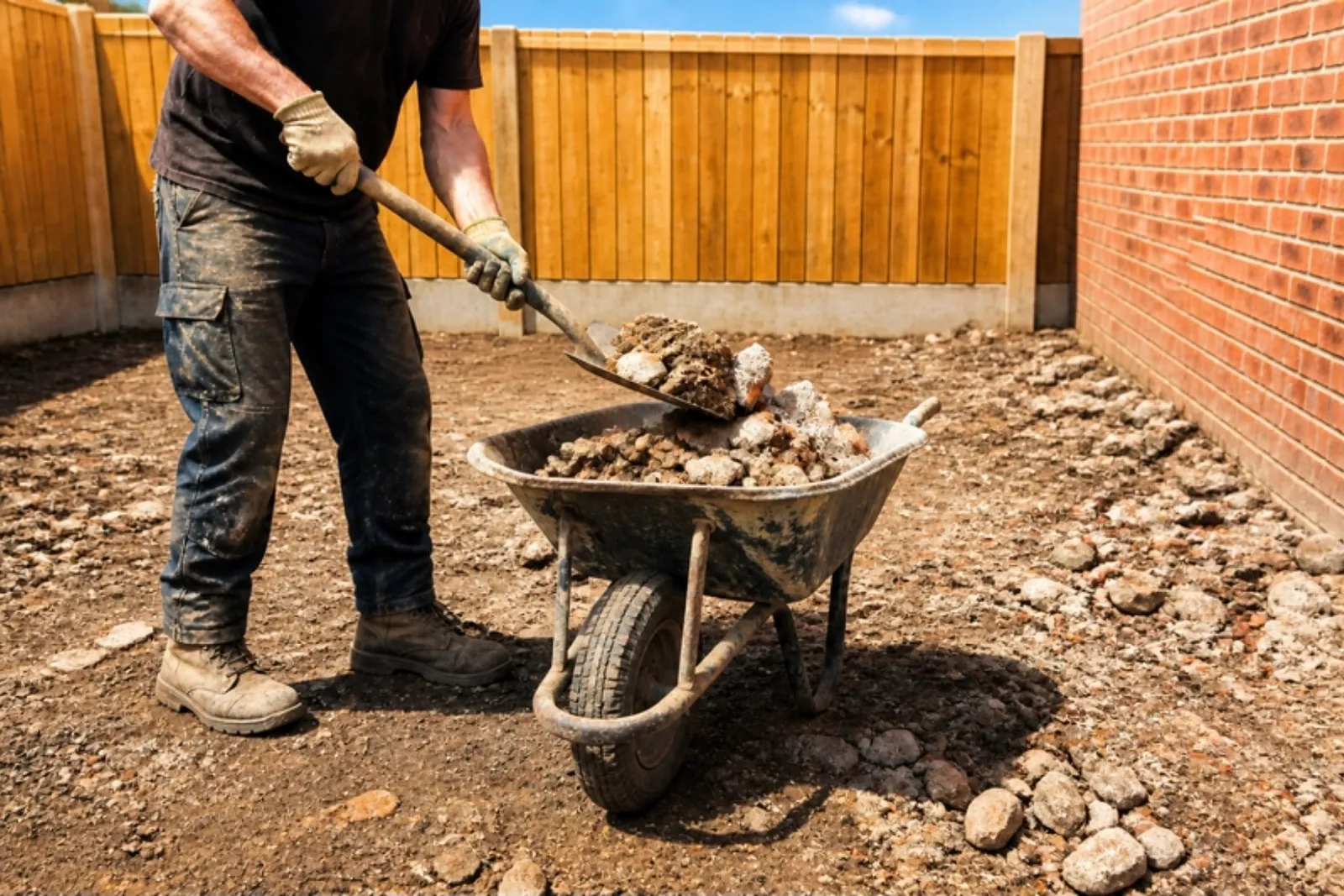
Surface debris, stones and builders' leftovers are picked out and removed. Any buried rubble found is costed separately before it comes out.
-
02Ground
Loosening
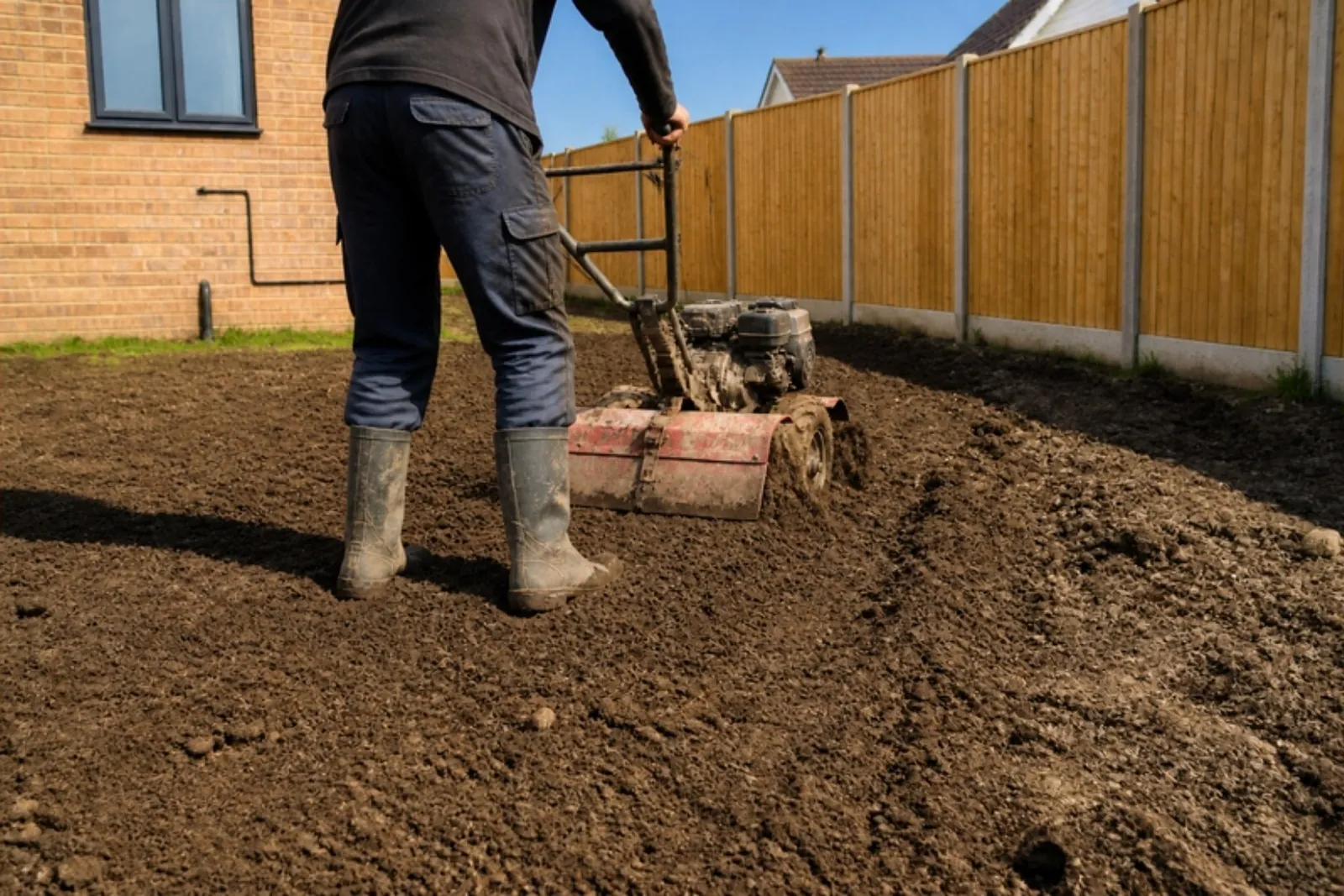
Hard, compacted ground is rotavated and broken up so roots and water can get in, and any stones brought up are raked off.
-
03Surface
Topsoil and levelling
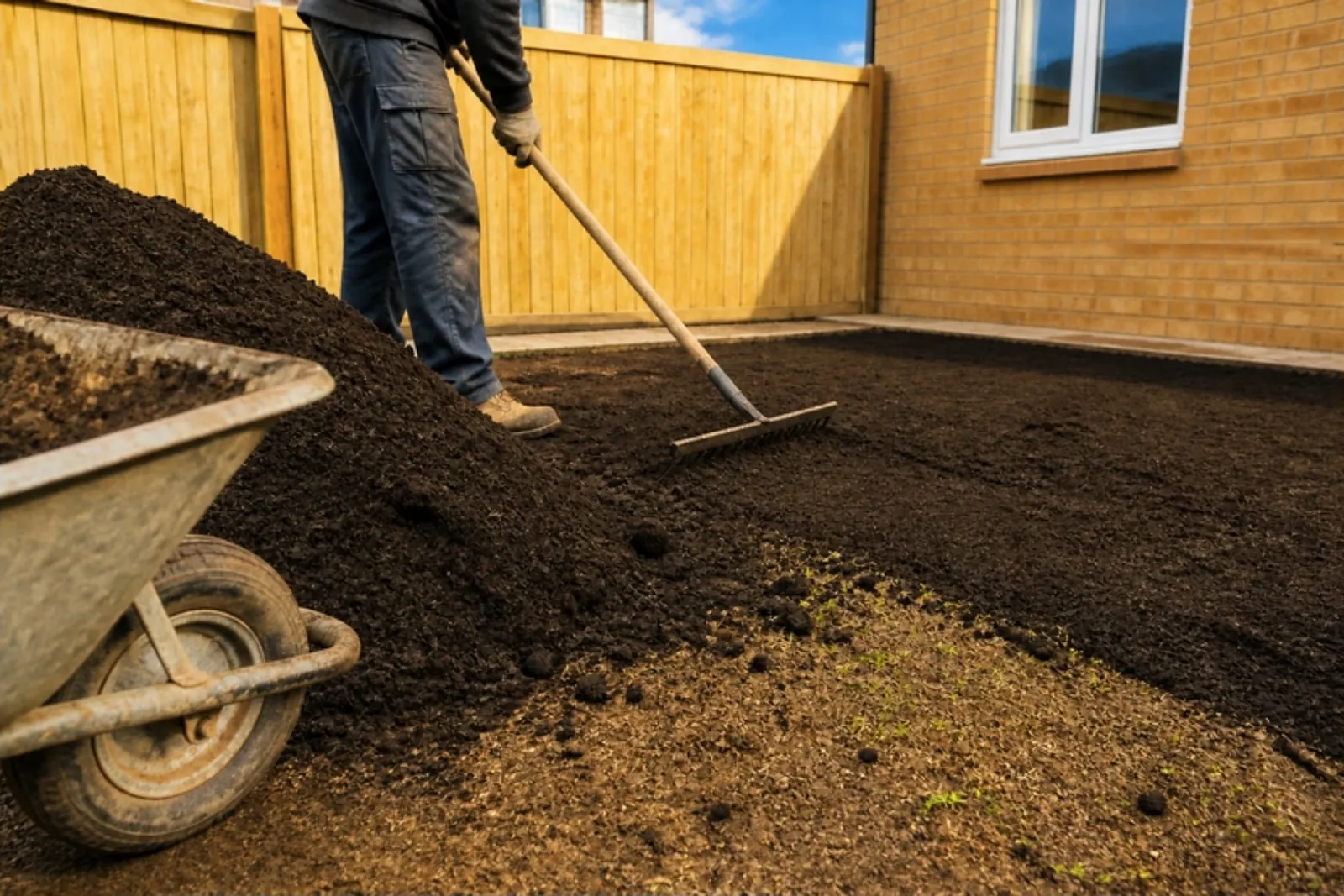
Topsoil goes on where the existing layer is thin or poor, then everything is raked to an even finish and firmed, keeping a gentle fall away from the house.
-
04Lawn
Turfing
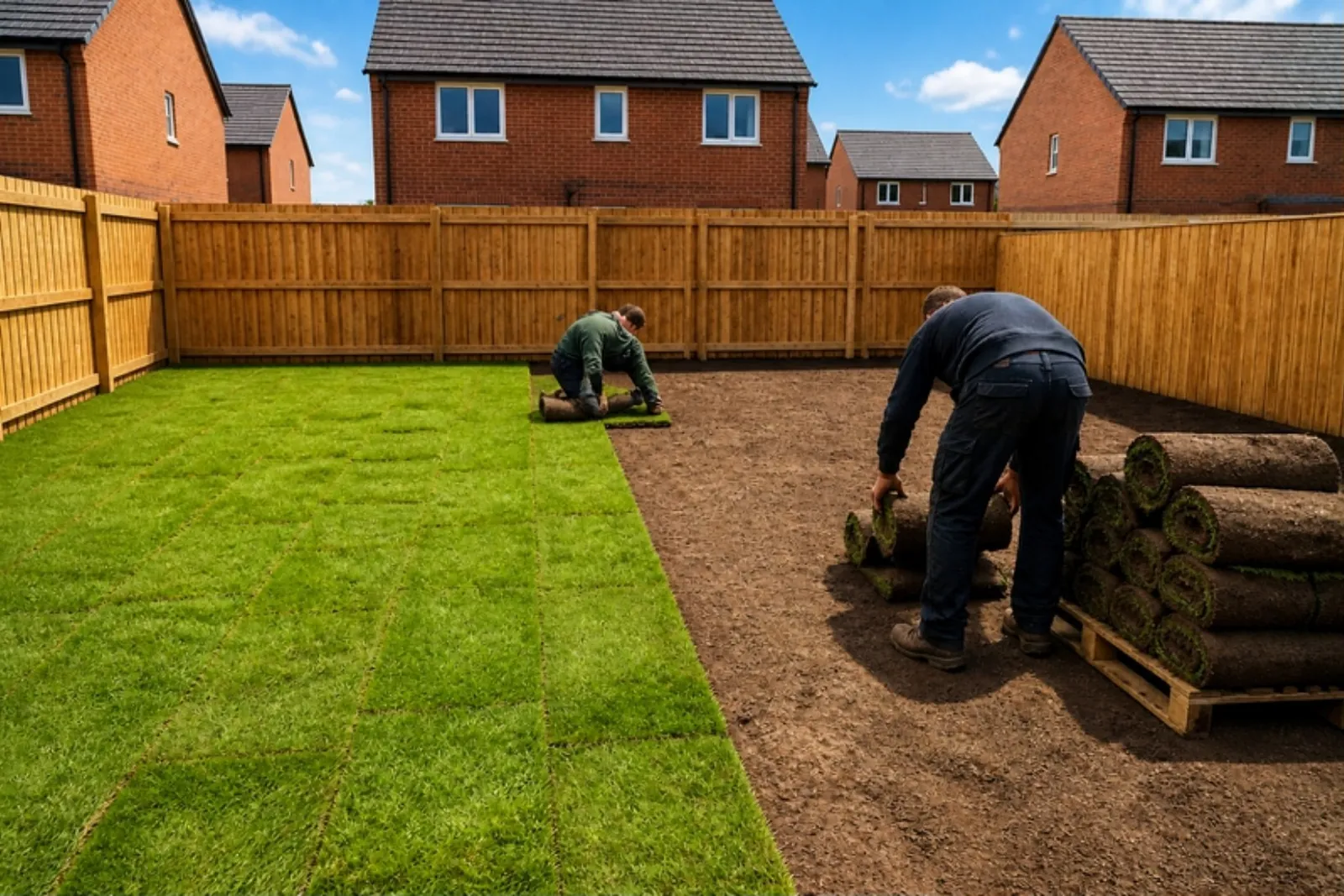
Fresh turf is laid in staggered rows, like brickwork, with tight joins, then cut to shape around paths, borders and any paving.
-
05Hand over
Finishing
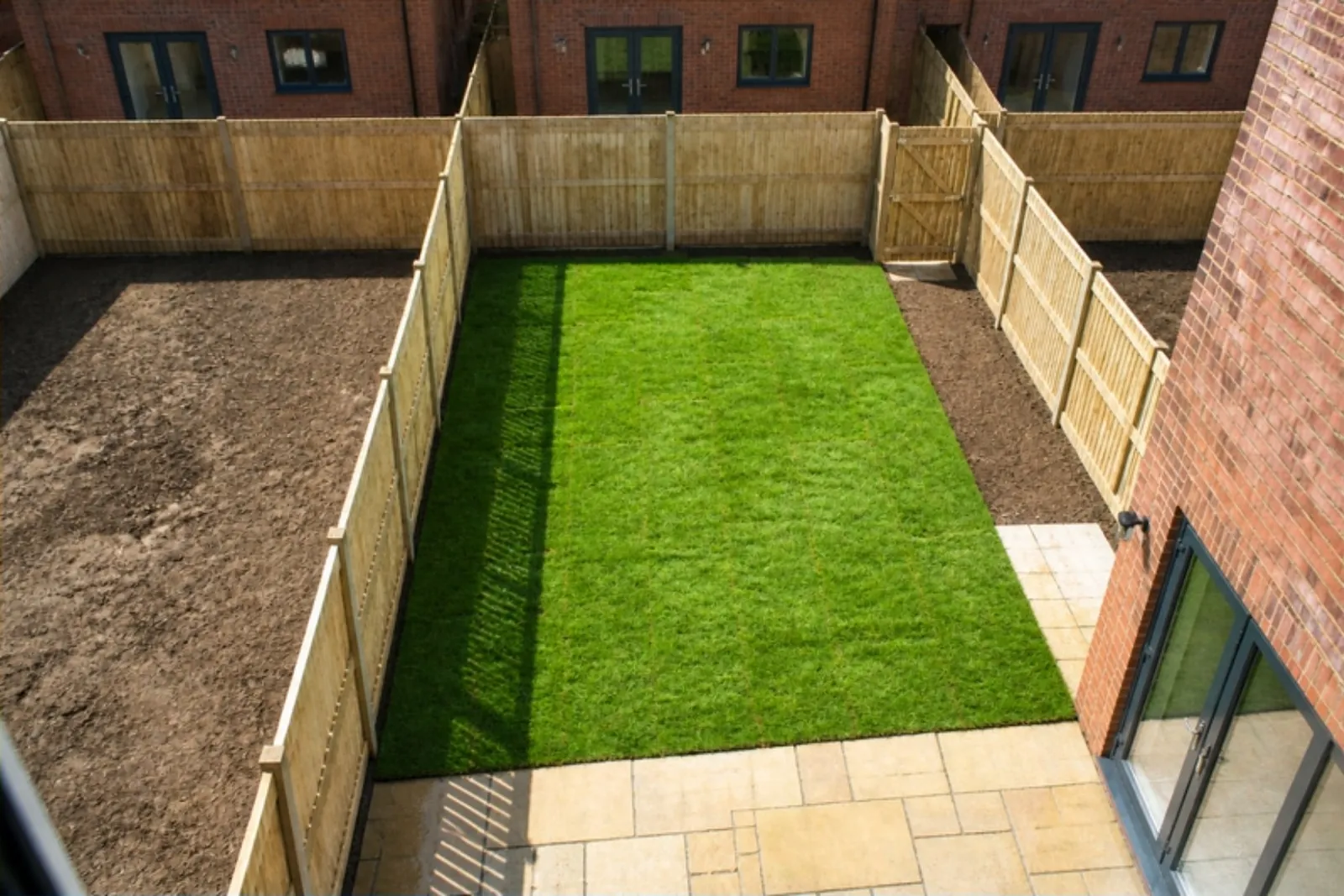
Edges are trimmed neat, the job waste is cleared away and you're given watering and mowing advice to follow.
Timing
Planning your garden day
Turf can be laid through much of the year, so there's no need to wait for a particular season.
On the day
Most gardens are finished within a day. A large plot, paving as well, or ground needing heavy work can run longer, and your quote sets out what's involved.
Weather
Waterlogged, frozen or baked-hard ground isn't good for laying. If the weather turns, your date may need to move, and you'll be offered the next suitable day.
If your estate is still being built
Building sites have their own rules on access, parking and working hours. Let us know about gates, site roads or restrictions when you ask for your quote so the day can be planned around them.
Aftercare
Looking after your new lawn
New turf needs a little attention while it roots into the soil underneath.
- Water well straight after laying, then every day in dry weather until it has rooted
- Water in the early morning or evening so less is lost to the sun
- Keep foot traffic, pets and play to a minimum while it settles
- Wait to mow until the turf has knitted down and won't lift when gently tugged
- For the first cuts, set the mower high and take off only a little
- Hold off on feed and weedkiller until the lawn is well established
Every lawn depends on watering, weather and use once it's down, so it helps to follow the aftercare advice you're given on the day.
FAQs
Questions about your new garden
Do I need to be home on the day?
It helps if someone can be there at the start to show us around and confirm access. After that, as long as the garden can be reached, you don't need to stay in.
Will you need water or electricity?
An outside tap is useful for watering the new turf at the end of the job. Let us know if your new build doesn't have one fitted yet.
What if you find rubble under the surface?
Buried brick, block or concrete comes out at extra cost. You'll see what it adds before any of it is dug out.
Can you keep the builder's turf?
If it's healthy and level, it can sometimes be kept and blended in. Often it's thin or laid straight onto poor ground, in which case lifting it gives you a better lawn.